
A corporate team headshot day fails for boring reasons: nobody got clear wardrobe guidance, the boardroom was double-booked, and the first late partner cascaded through the afternoon. The photography is rarely the problem. The ops are.
This guide helps you prepare for corporate team headshot day with a practical checklist that works for Vancouver law, finance, and corporate teams. It is written for the HR coordinator, office manager, or firm marketing lead who owns the planning process. Individual wardrobe detail lives in our what to wear for corporate headshots guide. Here we cover everything around the camera so the headshot session stays calm and the final images stay consistent.
If you are comparing formats first, start with studio vs on-location team headshots and our team headshots and corporate headshots pages.
At a glance
- Lock style, headcount, and studio vs on-site 3–4 weeks before shoot day.
- Send calendar invites with each person’s slot in the subject line — not a wall noticeboard.
- One clear wardrobe email beats vague “business casual.”
- Book a quiet room with power, space for lights, and a tethered monitor station.
- Confirm delivery, naming, and LinkedIn/website usage before anyone steps in front of the camera.
What a successful corporate headshot day actually looks like
A successful corporate headshot day has three outcomes:
- Consistency — same light, background, crop, and colour treatment across everyone who will sit on the website, intranet, or pitch deck.
- Participation — the team members who need to be photographed actually show up in their slots.
- Calm — nobody is guessing what to wear, where to go, or whether they “got the shot.”
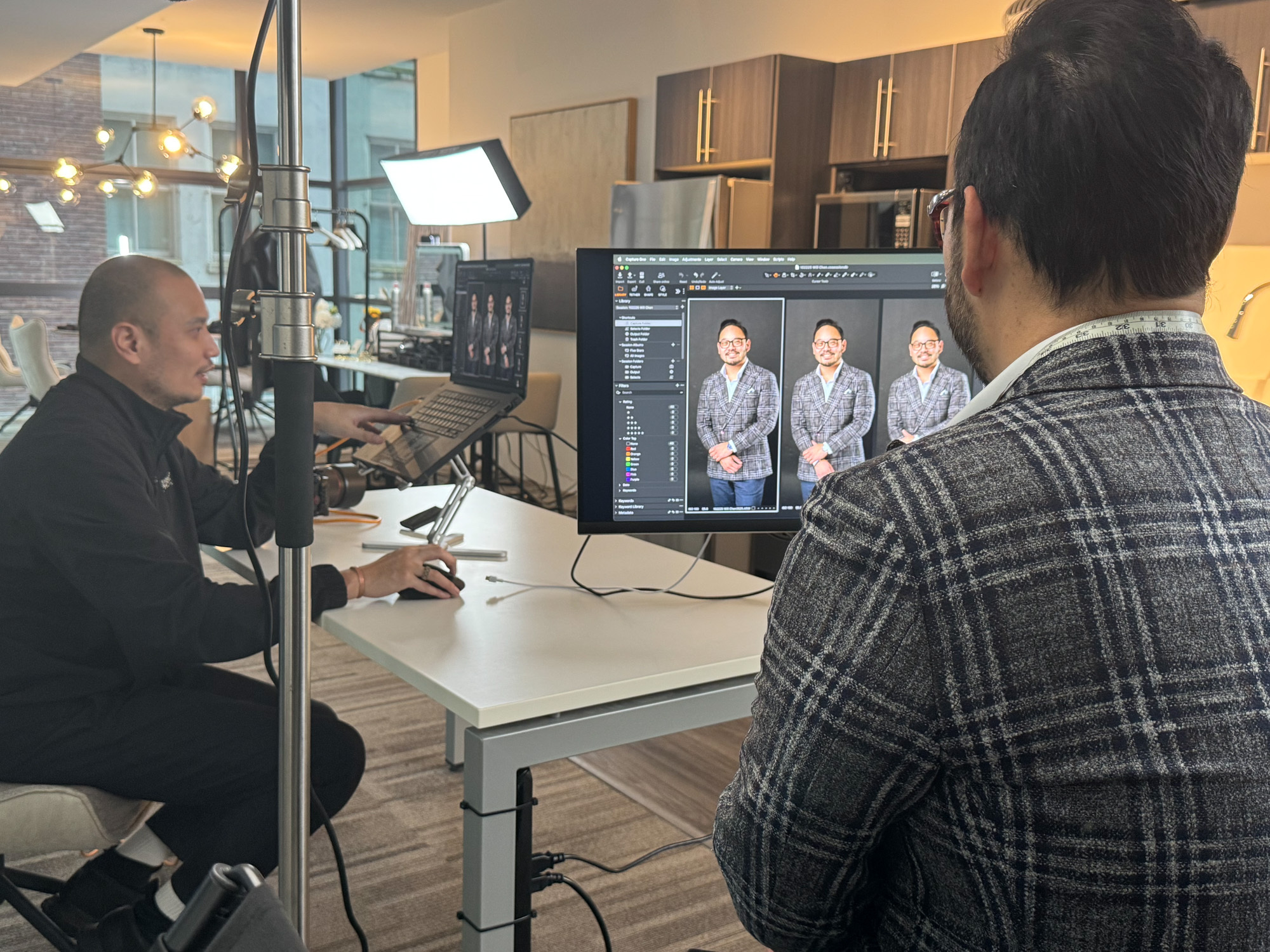
Tethered shooting (live review on a full-size monitor) helps people feel confident before they leave the set. It does not fix a vague schedule or a room that is too small for a proper lighting setup. Careful planning is still the leverage.
Your corporate headshot photographer should specialise in headshot photography — not weddings or events as a primary service — and be able to show a consistent portfolio of professional headshots for teams like yours. Discuss vision and goals before shoot day so the style brief is locked.

Three to four weeks out: lock the decisions
Plan for a minimum of three to four weeks between confirming the photographer and the session date. That window covers internal communication, schedule sign-up, and wardrobe prep without rushing partners who book last. Large firms sometimes need multiple days; smaller teams often finish in a single day if the schedule has enough buffer time.
Style guidance (one look for the whole directory)
Agree these with marketing (or whoever owns brand) before anything else. Style guidance is how you stay consistent across forty professional photos:
- Background colour or type (seamless vs soft office depth)
- Crop (head-and-shoulders vs wider)
- Formality (jacket expected or not)
- Whether new photos must match an existing team grid
- How images will land on the company website, LinkedIn profile picture crops, and email signature blocks
Share a few reference images from your current site if you want continuity. For law firms refreshing a partner grid, see also lawyer headshots in Vancouver.
Write the brief down in one short paragraph. That paragraph becomes the spine of the employee email and the shot list for the day.

Studio or on-site location
Rough rule used by most organisers we work with:
- Studio (838 W Hastings St #803, near Waterfront Station) — smaller groups, executives who want a focused photo session, or when you want maximum control and zero office noise. Controlled lighting beats uncontrolled natural light for matching skin tone and colour across a full directory.
- On-site mobile studio — larger headcounts, busy floors, and days where travel would kill participation.
Either can produce a consistent directory. The choice is logistics and experience, not “which one looks professional.” Flag travel early if your office sits outside downtown Vancouver or the core Lower Mainland routes we already cover.
Who is in scope
Decide early: everyone on the floor, client-facing roles only, partners only, or leadership plus staff. Add a short list of late joiners (new hires, people on leave) and how you will catch them later — often a studio top-up matched to the same setup. Encourage team members early so the signup fills before the last week.
Two weeks out: the schedule that survives contact with reality
Slot length and buffer time
Team days run on short slots. A practical pattern for directory-style portraits:
- Standard block per person for a guided professional headshot with live review
- Longer block for anyone whose image will carry heavy use (managing partner, practice head, CEO) if you want more expression options or different looks
- Buffer time every couple of hours so one overrun does not cascade when someone is running late
Do not schedule continuously from first to last. Senior people often book late; without slack, they get the rushed end of the day. Build enough time into the plan for check-in, wardrobe tweaks, and live review — not only camera time.
Build a simple sign-up (shared sheet or shared calendar) at least two weeks out. Include no-show / swap rules: who to email if a hearing runs long, and whether a standby slot exists at the end of the day. Consecutive scheduling by department keeps the workflow efficient without creating chaos in the hallway.
Calendar invites, not a noticeboard
Send each person a calendar invite with their time slot in the subject line. A printed list on a wall does not create accountability. The invite should also carry location (studio address or which boardroom), check-in instructions, and a one-line wardrobe reminder. Reminder emails the day before reduce no-shows more than a single blast weeks earlier.
Wardrobe and style guidance for the team
Send one clear email. Ambiguous “business casual” produces twenty interpretations of what to wear.
Include:
- Date, location, and individual slot reminder
- Dress standard in plain language (e.g. “navy or charcoal jacket preferred; solid colors; no busy patterns or logos”)
- Background colour if it affects clothing choices
- What to avoid (shiny fabrics, large logos, loud patterns, oversized jewelry)
- Bring a second shirt or blouse option — a light blue shirt or white shirt under a jacket photographs cleanly on most skin tones
- Arrive camera-ready a few minutes before the slot (mirror / washroom first)
- Whether hair/makeup support is on site or self-prep; if people wear makeup, keep it natural so studio lighting does not create shine
- Who to contact day-of (HR coordinator or office manager)
Point people to the longer corporate wardrobe guide rather than rewriting it in the email. Keep the email short enough that partners actually read it. Fit and comfort matter: clothes that feel awkward become postures that look awkward.

What not to wear (short summary)
For a corporate headshot day, steer team members away from:
- Busy patterns, loud stripes, and big logos
- Neon or overly bold colors that fight the background (a little personality is fine; costume energy is not)
- Shiny fabrics that create hotspots under lights
- Deep V-necks or anything that distracts from the face
- Novelty accessories
Solid colors in navy, charcoal, soft neutrals, and classic light blue or white shirts usually win. Wardrobe guidance should match company culture and brand formality without forcing identical outfits.
Facial hair, glasses, and grooming
Ask people to tidy facial hair a day or two before shoot day so edges look intentional, not grown-out. Schedule haircuts a few days ahead of the headshot session, not the morning of. For people who wear glasses: clean lenses, anti-reflective coatings help, and we can manage glare with lighting and retouching when needed — but dirty lenses on arrival still waste time. Regular grooming before the session helps people feel confident on camera.
Common headshot mistakes on team days (and how to avoid them)
Most problems on a headshot day are operational, not artistic:
- No style brief — the grid looks like five different studios.
- No buffers — one person running late cascades the afternoon.
- Vague wardrobe notes — twenty interpretations of “business casual.”
- Wrong room — open reception, low ceilings, or uncontrolled windows fighting the lighting setup.
- No live review — people leave unsure and marketing chases galleries for weeks.
- No plan for final images — files land in someone’s inbox with no naming convention, no CMS owner, and no LinkedIn profile picture export.
- Treating it like a candid event — team headshot photography is a guided process; rushing kills expression quality.
Fix these in the planning process and the photographer’s job gets easier.
Smile, expression, and how to pose for a corporate headshot
Should you smile in a corporate headshot? Usually yes — a natural, approachable expression beats a stiff “passport” stare for most Vancouver professional contexts. Your headshot photographer will coach posture, chin angle, and expression so people who feel awkward in front of a camera still leave with usable frames.
A corporate headshot should look like a calm, current version of the person clients will meet: sharp eyes, clean light, wardrobe that matches the role. Seeing frames live on a monitor during the photo session helps people relax and trust the headshot process. Hands-in-pockets or a slight turn of the shoulders can look confident when coached; crossed arms only work when the vibe stays open, not defensive.
Room and logistics if you are shooting on-site
Book the room before you celebrate the date. Typical needs for a mobile studio lighting setup:
- A quiet room with a door that closes (boardroom is usually ideal; open reception is not)
- Enough floor space for lights, backdrop, subject, and a tethered monitor station
- Ceiling height that does not fight softboxes
- Mains power
- Control over windows if uncontrolled natural light will fight the lights
Clear tabletops and visual clutter in the shoot zone. Assign building access, visitor badges, and load-in timing so the photographer can set up before the first slot — setup is not optional time stolen from the first person on the list. Mobile setups can often be ready shortly after arrival when access is organised.
Day-of roles: coordinator, photographer, people
Your on-site coordinator (HR coordinator, office manager, or marketing) should be reachable for no-shows, swaps, and “where is the room?” questions. They do not need to stand in the room all day; they need to be findable. Having someone from marketing for the first hour to confirm the look is useful; after that, extra observers often slow the cadence.
The headshot photographer team (at HeadShot Photo: Ramir, Young J. Kim, and supporting crew as scoped) runs the set, coaches expression, and keeps the tethered review moving. People leave knowing they have a usable frame — that is the point of live review. Choose a corporate headshot photographer whose portfolio shows consistent team work, not a generalist portfolio with a few portraits mixed in.
Each subject should:
- Arrive a few minutes early, camera-ready
- Silence phones before stepping in
- Follow wardrobe notes (second option in hand if unsure)
- Use the live monitor: pick a hero expression before walking out
Keep the room calm. Team days are efficient by design; efficiency still needs clear direction, not rushing. Sleep and basic rest the night before help more than last-minute panic.
After the shoot: final images, delivery, and where photos get used
Confirm before the day how many finished images per person you need, who approves them, and where files will live (DAM, SharePoint, website CMS). Set clear expectations for delivery of the final product: naming conventions, file formats, and who uploads to the website.
Decide whether individuals may update LinkedIn with the same hero frame — usually yes, and consistency across website and LinkedIn profile picture is an advantage. The same professional photos often land in email signature blocks, proposal decks, speaker bios, and press kits. See our LinkedIn photoshoot guide for crop and usage notes.
Plan the long tail: articling students, laterals, and staff hires through the year. Style-matched studio top-ups keep the grid from looking patched. That continuity is often more valuable than squeezing one extra person into an already full day.
Re-shoot policy and personal brand continuity
Ask up front how re-shoot requests are handled if someone blinked through every frame or a wardrobe issue only shows up in retouching. A clear re-shoot policy prevents awkward follow-ups. For individuals, a strong professional headshot is also personal branding photography — one calm, current image that supports their personal brand across channels. On a team day, keep the priority on directory consistency; personal brand variety can be scoped as longer individual sessions when needed.
Helpful tips the week before session day
A few helpful tips in the final week keep the headshot process smooth:
- Re-send the wardrobe note with solid colors called out again (including light blue shirt / white shirt options).
- Confirm the room, power, and building access for on-site days.
- Print or share the shot list and schedule with the HR coordinator and office manager.
- Steam or press outfits the night before so clothes arrive camera-ready.
- Remind people who wear glasses to clean lenses.
- Confirm who will collect final images and where the website owner will store them.
- Block buffer time visibly on the shared calendar so “running late” has somewhere to land.
Make as few decisions as possible on shoot day. Wardrobe, room, and roles should already be settled. Session day energy should go to expression and flow, not debates about backgrounds.
How to dress for a corporate headshot (team-day version)
How to dress for a corporate headshot on a team day is simpler than a personal branding photography session with five outfit changes:
- Match the formality of your company culture.
- Prefer solid colors over busy patterns.
- Use navy, charcoal, soft neutrals; a light blue shirt or white shirt under a jacket is a safe default for most skin tones.
- Keep bold colors intentional and rare so they do not dominate the grid.
- Bring a second option in case the first fights the backdrop.
- Avoid logos and shiny fabrics.
Coordinate formality across team members without forcing identical outfits. Consistency of level (all jackets, or all smart-business) matters more than identical colours. Details like fitted shoulders and unwrinkled fabric show up clearly in professional photos.
Lighting: natural light vs controlled lighting setup
Uncontrolled natural light through a glass boardroom wall changes colour and contrast every twenty minutes. That is why serious team headshot photography uses a controlled lighting setup — in studio or as a mobile kit on location — so skin tone and background stay matched from the first person to the last. Controlled light is how you create a directory that still looks coherent months later when new hires top up in the same style.
Email signature, website, and LinkedIn profile picture usage
Before shoot day, decide the usage map for final images:
- Company website team grid
- Intranet / bio pages
- LinkedIn profile picture (tighter crop for the circle)
- Email signature
- Proposal decks and speaker one-pagers
One hero image, exported in the right crops, beats three mismatched “good” photos. Confirm naming conventions and delivery formats so marketing is not renaming files for a week.
FAQ
How far in advance should HR book a team headshot day?
Three to four weeks is a practical minimum for communication and scheduling. Busier seasons (often spring and fall) benefit from locking the date earlier. Urgent needs happen; contact us and we will say honestly what we can support.
How long does each person need?
Directory-style sessions are short and guided — typically a few minutes in front of the camera once they are camera-ready, within a booked slot that includes check-in and live review. Leadership portraits that need more expression options should get a longer hold on the schedule.
Do we need a makeup artist on a team day?
Not always. Many corporate days run on self-prep with clear grooming notes. Makeup support helps when you want uniformity under studio light or when executives expect it — flag it when you scope the day. If people wear makeup, keep it natural.
What if someone misses their slot?
Build a short standby window at the end of the day and a clear swap process. Chronic no-shows are an internal culture issue more than a photography issue; the schedule only works if leaders treat the invite like a meeting.
Can new hires match the look later?
Yes. Keep setup notes (background, crop, lighting intent) on file and book style-matched studio or on-site top-ups. That is how directories stay consistent instead of drifting.
How should I prepare for a headshot session as an individual on the team day?
Follow the wardrobe email, arrive camera-ready a few minutes early, and trust the live review. Bring a second outfit option. Tidy facial hair and glasses. You do not need to invent poses — your photographer will guide you.
What should a corporate headshot look like?
Sharp, well lit, consistent with the rest of the team, and recognisable as the person clients will meet. Solid wardrobe, calm expression, clean background. Quality beats novelty.
Ready to plan a team day? Tell us headcount, preferred date window, and studio vs on-site. We will help you with a schedule template and a clear prep brief.
Book a session · Team headshots Vancouver · headshotphoto.ca · info@headshotphoto.ca · +1 778-717-6169
Studio: 838 W Hastings St #803, Vancouver, BC
Photographers: Ramir & Young J. Kim
